Education
What Is Bit Fitting?
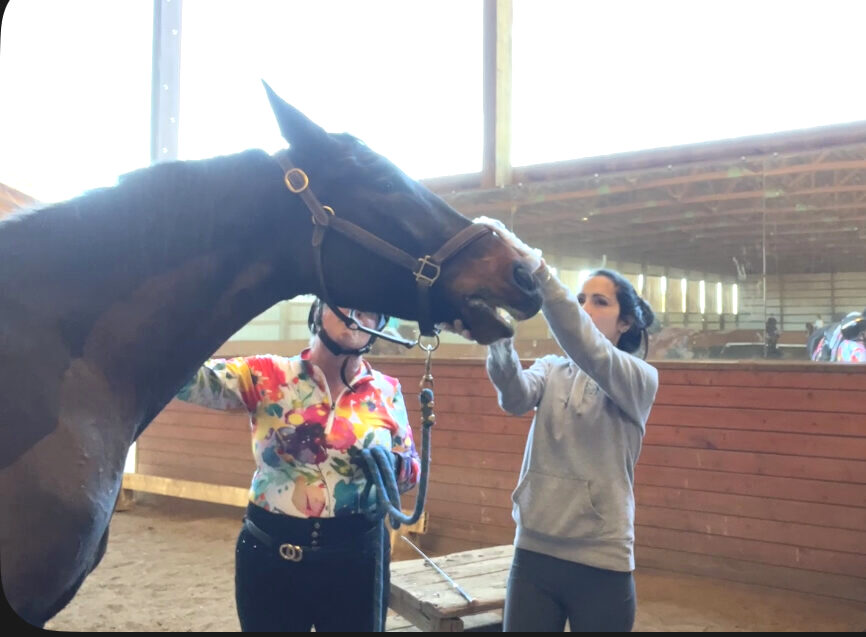
Most riders are taught to think about a bit in two dimensions: the width of the mouthpiece, and the action it produces. Bit fitting starts somewhere else entirely — with the individual shape of a horse's mouth, and how a given mouthpiece sits inside it. There are also considerations for the horse's way of going, and level of training taken into account. Two horses can wear the same size bit and experience it completely differently, because their bars, tongue, palate and lips are individual to the horse.
Bit fitting is the process of matching a bit to that individual anatomy, then confirming the match under saddle.
None of these are proof on their own, but together they're the pattern we look for before recommending any change — and the signs aren't always where you'd expect to look.
Usually coming from the mouth
Usually in the horse's way of going
Disclaimer: a bit is not a magical fix-all. Some of the indicators above can be caused by pathology or pain elsewhere. A bit will not fix expressions of pain — however it should never be overlooked, and is one of the simplest, and cheapest, fixes.
It's natural to reach for what worked before — but a bit is a fit to one mouth, not a blanket formula. A mouthpiece that was agreeable to one horse will likely not be a perfect fit for another, due to differences in the anatomy of the mouth, level of training, and the horse's preference. Every fitting starts from zero, regardless of what's worked in the past.
Bit fitting isn't a substitute for dental, veterinary, or saddle fitting care — it works alongside it. Tara is no stranger to reviewing notes on recent dentals from your vet. If you have a saddle fitting or refit scheduled, her preference is to visit after that fitting. If this isn't feasible — as can happen with clinics held in other states — please get in touch ahead of time so the effects of an uncomfortable saddle can be mitigated, ensuring the bit and bridle fitting is still effective.